Showing posts sorted by relevance for query Flowers. Sort by date Show all posts

Tuesday, July 1, 2025

Conditions for high-quality drying of callas.

 To dry calla lilies properly, you need a dry, dark, well-ventilated room. The flowers should be hung with the buds down to preserve their shape. The optimal temperature for drying is from 18 to 24 degrees Celsius.
Conditions for high-quality
 drying of callas.


 Detailed conditions for drying calla lilies:

1. Choosing a place:
 A dark room, protected from direct sunlight, will prevent fading and dulling of the color.
Good air circulation is necessary to prevent the formation of mold.
Avoid rooms with high humidity, as this can lead to rotting and deformation.

Thursday, July 10, 2025

Will help you get high-quality dried calla flowers.

 To purchase high-quality dried calla lilies, it is best to contact trusted suppliers who specialize in dried flowers. You can find them online, in flower shops, from florists, or at fairs. When choosing, pay attention to the appearance of the flowers, their color, shape, and the absence of damage. It is also worth finding out about the drying method and storage conditions to ensure the quality of the product.

Will help you get high-quality
dried calla flowers.

 Here are some tips to help you in your search and selection:

1. Finding suppliers:

 Online stores:

 Look for specialized websites that sell dried flowers. Pay attention to reviews about the store and the quality of their products.

Saturday, August 24, 2024

Anemone Flower.

 Anemone, also known as windflower (from the Greek "anemos" meaning wind), is a perennial herbaceous plant in the Ranunculaceae family, known for its delicate, poppy-like flowers. The flowers come in a variety of shades, including white, pink, red, blue, and purple, and are prized for their ornamental beauty both in gardens and as cut flowers.

Anemone Flower.

 Key Facts and Symbolism
Name and Legend: The name "anemone" comes from the Greek word meaning "wind," referring to the delicate petals that sway with the slightest breeze. According to myth, red anemones grew from the tears of Aphrodite mourning her lover Adonis, making the flower a symbol of eternal love or anticipation.

 Characteristics: Anemone petals close at night or before rain and reopen in the morning. Uses: In addition to ornamental use, some anemone varieties are used in folk medicine to treat seizures and emotional stress.
Popular Species and Varieties

Tuesday, July 16, 2024

Rose Double Delight hybrid tea

 Landing location

 Beautiful roses are made to be admired, so for planting choose a place that will be clearly visible from the house, and, at the same time, worthy of the queen of flowers among other plants in the garden. All roses love a lot of light, but if they are in the sun all day, they will quickly fade.

www.gerbizor.blogspot.com
Rose Double Delight hybrid tea.

 When growing roses in the southern regions in open sunny places, there is a high probability of burns on the petals. It is better if the rose is in partial shade in the afternoon. The health of the rose largely depends on the planting location. For example, ensuring good air circulation will protect the rose from diseases and pests.

Sunday, September 1, 2024

Carnation Flower|Dutch carnation.

 "Dutch Carnation" is the common name for the garden carnation (Dianthus caryophyllus L.), which is widely cultivated as an ornamental plant, especially for cutting. It is prized for its large, double flowers, variety of colors, and long bloom period.

 Characteristics and Features
Dutch Carnations are typically perennial or annual (depending on the variety and climate) herbaceous plants with erect stems and narrow leaves.

 Carnation Flower|Dutch carnation. 

 Appearance: Flowers are typically large, double, with wavy or serrated petal edges, and low-growing colors (ranging from white and pink to red, yellow, and lilac, often with contrasting patterns).

 Height: Depending on the variety, heights can range from 50 to 70 degrees Celsius or higher.
Bloom: With proper care and sufficient sunlight, blooms can be profuse and long-lasting. Uses: Primarily used as an ornamental plant for flowerbeds and borders, and also as a popular cut flower due to its longevity in bouquets.
Popular Varieties
Many Dutch varieties were bred specifically for commercial cultivation and boast high yields and resilience.

 Shabo (Shabo): One of the most well-known varieties, reaching up to 50 cm in height, with large, double flowers in a variety of colors (for example, 'Marie Shabo' - yellow, 'Jeanne Dionis' - white).

 Florist (Florist): A variety growing up to 70 cm, distinguished by its large flowers.
Moonberry: A bush variety with lilac flowers.
Lagos: A bush variety with flowers of an unusual green color.

Friday, June 21, 2024

Rose Aachener Dom (MEIcapinal, Pink Panther, Panthere Rose)

 It would be more correct to call this beautiful hybrid tea rose grandiflora, because... its large flowers usually appear in racemes. The flowers are a beautiful salmon pink color, slightly more orange at the beginning and more pink at the end of flowering, but the shade is always very beautiful. The flowers withstand rain and sun well. The bush is hardy and vigorous, with gray-green foliage. The variety is resistant to black spot in the humid conditions of northern Europe. (ARE)

Tuesday, November 25, 2025

Hoya flowers secrete sweet nectar.

 Hoya flowers secrete a sweet, sticky nectar, sometimes so abundant that you may need to wipe down windowsills in the morning. This nectar attracts pollinators such as nocturnal insects and geckos.

Hoya flowers
secrete sweet nectar.

 Nectar Source: Nectar is secreted by Hoya flowers in the form of sticky droplets, often visible on the central flower of the inflorescence.

 Intensity: The amount of nectar secreted can vary greatly depending on the species and conditions.

Thursday, August 8, 2024

Chrysanthemums, Flowers, Blooming

 Chrysanthemums are popular flowering plants known for their incredible variety of colors and cultivars, typically blooming from late summer to fall.

Chrysanthemums, Flowers, Blooming


 Key Characteristics
Blooming Season: Most chrysanthemums bloom from August to October, and some late-blooming varieties can bloom as late as November, right up until frost.

 Color Variety: Flowers come in a wide range of shades: white, yellow, pink, orange, red, burgundy, cream, and even bicolor.
Flower Shape: Various flower shapes are available, including pompon, anemone, double, and semi-double.
Plant Size: Plant heights range from dwarf forms (20-25 cm) to tall (up to 100 cm).

Tuesday, June 18, 2024

Clematis

 Clematis is a popular climbing plant (vine), prized by gardeners for its profuse and long-lasting blooms. There are many varieties, varying in size, flower color, and, crucially, pruning group, which determines plant care.


 Planting and Care Basics

Planting Location: Clematis love sun (for its flowers), but its roots prefer shade and cool conditions. It is recommended to plant it in a sunny spot, but shade the root zone, for example, by planting low-growing annuals nearby.

Soil: Requires well-drained, nutritious soil. When planting, add humus, sand, lime, and complex fertilizer to the hole.

Watering and Fertilizing: Requires regular and abundant watering. Fertilize 1-2 times a month, alternating organic (not fresh manure) and mineral fertilizers.

Tuesday, September 10, 2024

Close up of a field of colorful tulips.

 A close-up of a field of colorful tulips is an image of a multitude of flowers, shot close up so that the details of their shapes and colors can be seen. This can be either a photograph or a work of art, creating the effect of immersing oneself in a sea of ​​flowers.

www.gerbizor.blogspot.com
Close up of a field of colorful tulips.

 Such images can be taken in various tulip fields, including natural areas.

 Example: A field of bright and contrasting flowers, with different hues visible—from red and orange to yellow, pink, white, and purple.

 Technical aspects: To take such a photo, the photographer typically uses a camera with a good lens and adjusts the focus so that one or a few flowers are sharp and the rest are blurred (a bokeh effect).

Sunday, July 19, 2026

Bacopa (also known as Sutera) is divided into two large groups.

 Bacopa (also known as Sutera) is divided into two large groups: hanging (for pots) and aquatic/aquarium. Popular garden varieties are distinguished by an abundance of small flowers and long shoots. Popular trailing and bush varieties for pots and flower beds: Blutopia (Blutopia): The most famous variety with delicate blue flowers, forms a neat lush bush. Snowtopia (Snowtopia): 

Bacopa (also known as Sutera)
is divided into
 two large groups.

 A popular snow-white variety with a long flowering period. Scopia Double Blue (Scopia Double Blue): A spectacular series with large double flowers of a rich blue hue. Olympic Gold (Olympic Gold): A unique variety with white flowers and unusual leaves of a yellowish-green hue. Giant Snowflake: A variety with very large white flowers and powerful shoots up to a meter long.

Friday, August 30, 2024

Anthurium Plant.

BOTANICAL DESCRIPTION

Flowers
The elegant flowers of this tropical aroid are grown and sold all over
the world. The actual flowers are borne on the "spadix," an upright organ in
the center of the "spaulx," which is the ornamental petal-like organ surrounding
the spadix. Although anthuriums are sensitive to cold temperatures, they have a
long vase life if properly treated. 


www.gerbizor.blogspot.com
Anthurium Plant.

 End of their vase life is usually
the result of an inability to extract water from the vase solution and is associated
with a loss of gloss and then a blueing of the spathe. Much of the water lost
by the flower evaporates from the spadix. An application of wax to prevent this water loss, or a pulsing of silver nitrate to improve the flower's water
relationships, can greatly extend their vase life.
Leaves
The leaves are large, long-petioled, heart-shaped, and come in a variety of colors. They have a prominent midrib and lateral
ribs.

Monday, October 21, 2024

Sorbaria sorbifolia "Sem" | plant lust.

  Rowan-leaved rowan (Sorbaria sorbifolia) is a deciduous shrub of the Rosaceae family.

 In nature, it is found in the temperate zone of Asia - in Japan, China, Mongolia, the Southern Urals, Siberia and the Far East.

www.gerbizor.blogspot.com
Sorbaria sorbifolia "Sem" | plant lust.

 Rowan-leaved rowan grows very quickly and eventually reaches a height of 2-3 m. Its leaves are complex, 14-30 cm long and 5-17 cm wide, green, similar to rowan leaves - hence its species name.

Saturday, September 5, 2026

Spireas are divided into two main groups based on flowering.

 Spireas are divided into two main groups based on flowering time: spring-flowering and summer-flowering.

Spireas are divided into
two main groups
 based on flowering.

 Spring-flowering species: These shrubs bloom on the previous year's growth. Their flowers are usually white, gathered in umbels or corymbs, and bloom in May and June.

 Spiraea × cinerea 'Grefsheim' is a popular hybrid with graceful, arching shoots and double, snow-white flowers. Spiraea × vanhouttei is a large, spreading shrub with cascading branches covered in white flowers. Spiraea arguta is one of the earliest and most profusely blooming species with drooping branches. Spiraea nipponica is a dense shrub with dark green foliage and white inflorescences (the 'Snowmound' cultivar is well-known).

Sunday, August 18, 2024

Maki Flowers. Papaver is an annual plant

 Papaver is an annual plant. To collect seeds, leave one capsule of each color and sow them in the spring or before winter. But papaver is able to reproduce itself. On loose soil, self-seeding occurs. In the spring, it is enough to thin out the shoots, and you will again have a terry poppy. As practice shows, it can grow "like a weed." Agree, this is a pleasant property for a plant with beautiful terry flowers!

Monday, August 19, 2024

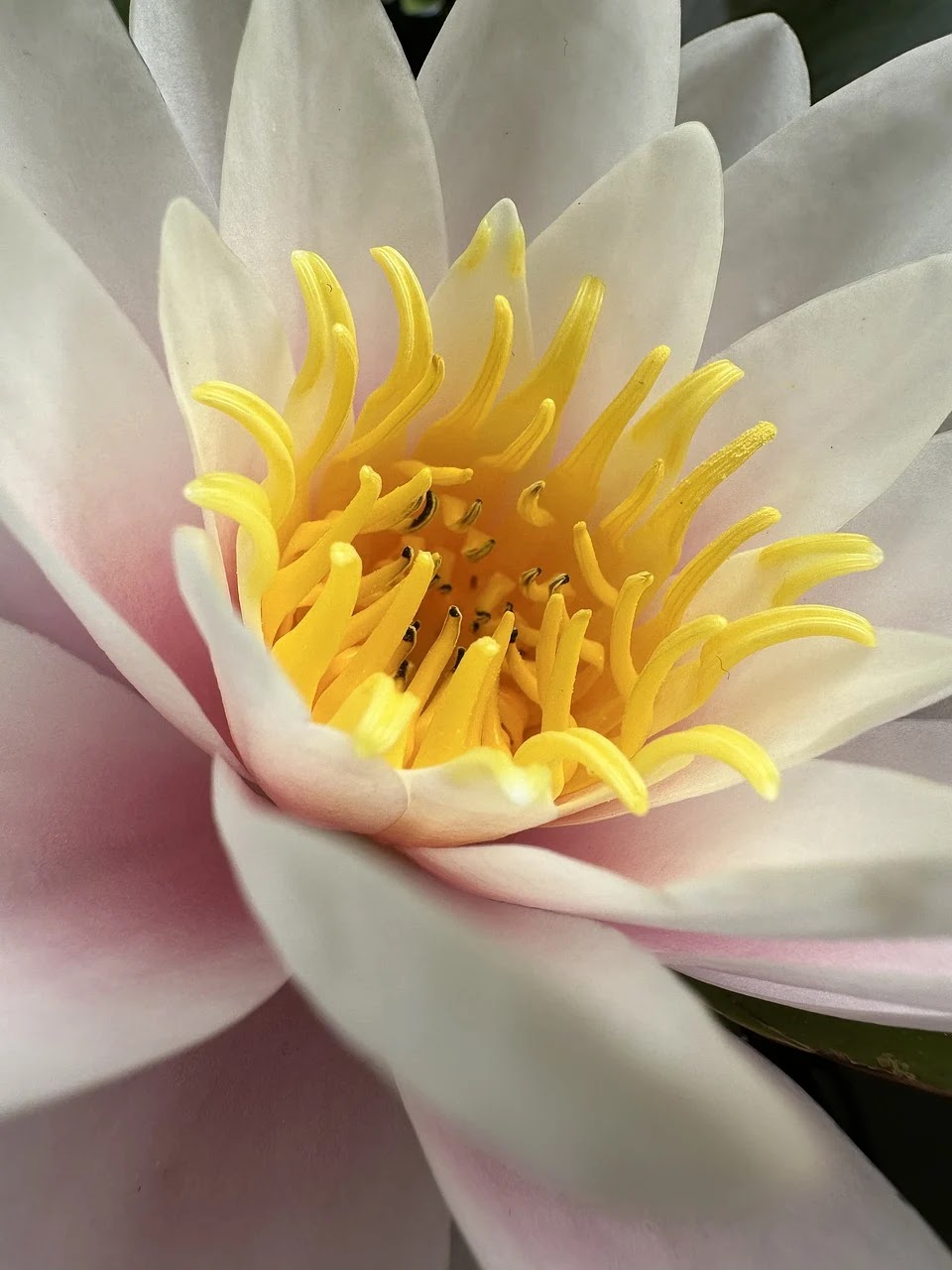
Images (Water Lily, Beautiful Flowers, Flower).

 "Water lilies" or "nenuphae" is a common name for water lilies (Nymphaea), water lilies (Nuphar), and lotuses (Nelumbo). Although strictly botanically, they belong to different families (Nymphaeae and Lotus), all are vibrant aquatic plants with beautiful floating flowers. These plants (water lilies and Nymphaea are synonyms) are popular pond inhabitants, important both as ornamental and as ameliorative plants, and also have cultural significance.


 Main representatives and their characteristics:
Water lily (Nymphaea): Large floating leaves and flowers, often white, pink, or yellow. This is the most common plant commonly referred to as a water lily.

 Water lily (Nuphar): A genus with yellow flowers, often less showy than those of water lilies, but also very common in temperate zones. Lotus (Nelumbo): Botanically, it belongs to a different family (lotaceae), but is similar in appearance, with leaves that rise above the water and flowers that also float or rise above the surface.

Tuesday, June 18, 2024

Plumeria Frangipani Flowers

 Plumeria and frangipani flowers are the same plant; "plumeria" is its scientific name, while "frangipani" is its common name. The name "plumeria" comes from the botanist Charles Plumier, and "frangipani" comes from the Italian marquis who created a perfume with the scent of this flower.

Plumeria Frangipani Flowers

 Origin of the names:

 Plumeria: Named after the French botanist Charles Plumier, who studied this plant in the late 17th century.

 Frangipani: Became popular when the Italian Marquis de Frangipani created a perfume with its scent in the 19th century.

Dahlia Mignon white

 A miniature dahlia with white petals surrounding a golden-yellow center. The plant is compact with dense, dark-green foliage. The flowers are white, 8-9 cm in diameter, single, not fluffy, but very delicate. Blooming is profuse, lasting from July until frost, with each plant producing up to 40 flowers per season. Dahlias prefer sunny sites with well-drained soil. The flowers are attractive to bees and butterflies. It is recommended to remove faded flowers to prolong the blooming period. This variety is ideal for flower beds, borders, and cut flowers.

Dahlia Mignon white

Family: Asteraceae

Species: Dahlia variabilis

Plant height: 40-45 cm

Sunday, November 23, 2025

The Hoya plant becomes especially attractive during flowering.

 During flowering, hoya becomes especially attractive due to its spectacular, fragrant inflorescences in the shape of stars or umbels. Flowers can be of different colors and shapes, and their appearance is often accompanied by the secretion of sweet nectar. Flowering can continue for several months, making the plant a real interior decoration.


The Hoya plant becomes
especially attractive
during flowering.

 Features of hoya flowering: Appearance: Hoya flowers have an unusual, "waxy" or "porcelain" texture, are collected in inflorescences and often resemble small stars.

 Fragrance: Many species of hoya emit a pleasant, often sweet aroma, which intensifies during flowering. 

 Flowering time: Flowering can occur in spring, summer or fall, depending on the species and conditions. 

 Peduncles: Flowers appear on last year's peduncles. 

Friday, September 11, 2026

The main types of pelargoniums are divided into several popular groups,

 The main types of pelargoniums are divided into several popular groups, distinguished by their growth habit, leaf shape, and flowering characteristics. Popular types and groups include: Zonal (*Pelargonium zonale*): 

The main types
of pelargoniums
are divided into several
popular groups,

 The most common type, featuring characteristic dark bands ("zones") on the leaves and spherical flower clusters. Ivy-leaved (Trailing): Features long, cascading stems and smooth, fleshy leaves that resemble those of ivy; ideal for hanging baskets and balcony boxes. Regal: Distinguished by large, often ruffled flowers with dark blotches or streaks on the petals; the bloom period is shorter than that of the Zonal type, but the display is spectacular.